Deserted Island
A fun game to help express bad feelings and to get to know each other! It can be applied as a "Life Skill activity".
Game details
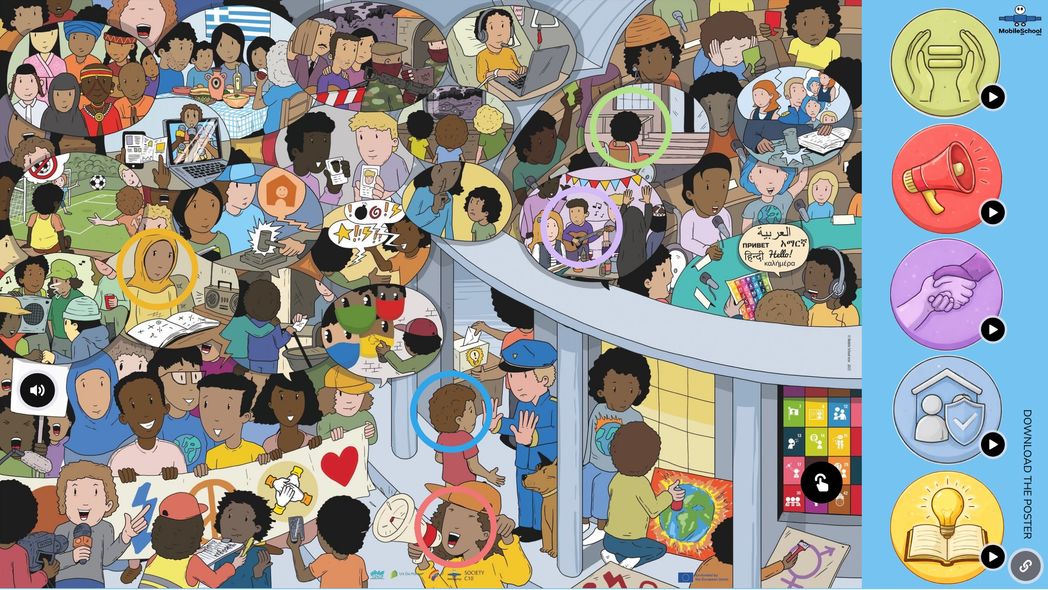
As an introduction to the activity, scan the QR code on the left side of The Children's Parliament: Access to Justice poster, and listen to the Introductory Story.
If you're playing the Digital Version of this game, press play on the audio icon on the left side of the poster and listen together with the group of players to the audio story.
Direct the group’s attention to the five icons on the right side of the poster, one for each pillar of Access to Justice: Equality, Voice, Support, Safety and Knowledge. Ask if anyone can guess what each icon means. If the players find it challenging, give hints and guide them toward the five pillars.
Ask players to point at one of the colored circles and reveal the story of the character linked to that pillar. Read the short story aloud to the group, then ask the players to find at least one situation on the poster where that same pillar is respected or violated.
You can find the characters' stories scripts and the solutions to the reflection activity in the dowloadable poster linked in the game Materials, and in the Extra Game Information below.
If you're playing the Digital Version of this game, you can click the colored circles to reveal the characters' stories.
Invite the group to share what they found and discuss why those situations are linked to that pillar.
You can find reflection questions to deepen the conversation in the Extra Game Information below.
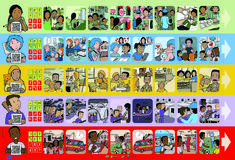
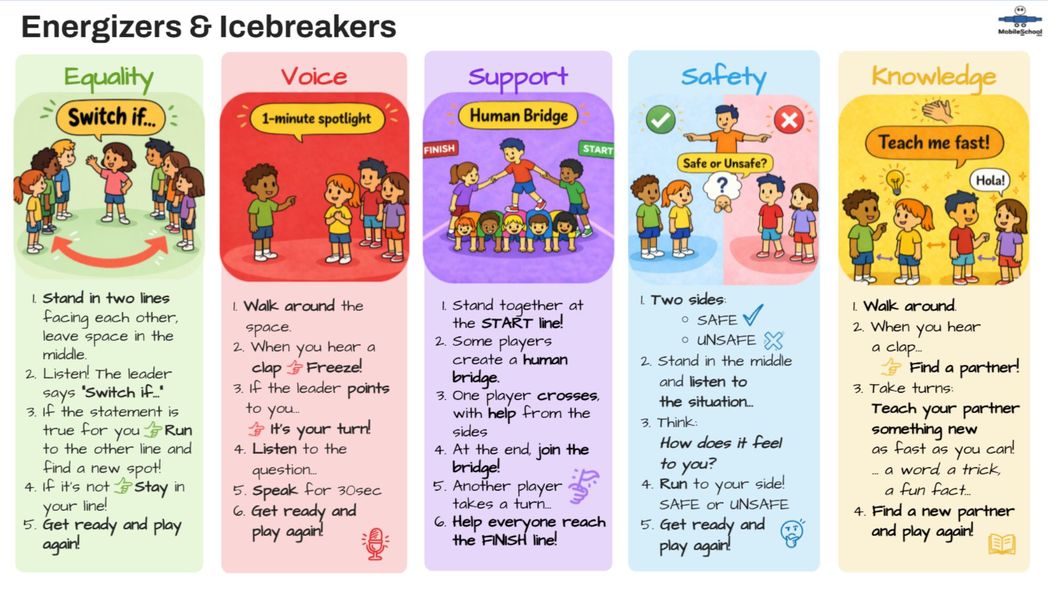
After discussing the first pillar, move to the next colored circle and repeat the process. If a specific pillar is of particular interest to your group, you can use “The Children’s Parliament: Access to Justice – Energizers and Ice-breakers” Poster to access an Energizer & Icebreaker activity, no materials needed.
If you're playing the Digital Version of the game, click the pillar's icon on the right side of the poster to reveal the Energizers & Icebreakers.
The activity ends when the five pillars, or the pillars of most interest to your group, have been explored and discussed.
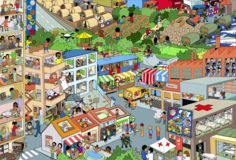
The Children’s Parliament poster shows a busy, colorful scene filled with children from different backgrounds, all living different realities. Five characters are highlighted with color-coded circles, each corresponding to one of the five pillars of access to justice. On the right side of the poster, the five colored icons represent the five pillars of access to justice: Equality; Voice; Support; Safety; Knowledge.
Each pillar aligns the child-friendly version of the UN Convention on the Rights of the Child with the Consortium of Street Children’s 4 Steps to Equality framework, keeping Access to Justice as the core focus throughout.
By using the interactive search-and- discuss methodology of the StreetSmart materials, this activity turns legal theory into action, encouraging vulnerable children to identify rights-based situations within The Children’s Parliament poster, starting a reflection process that builds self-esteem and empowers them to claim their rights and access justice.
This activity is part of the International Day for Street Children 2026 campaign “Protect, not Punish”, organized by the Consortium for Street Children.
Maryam arrives at school every morning full of energy - and every morning, she stops at the bottom of the stairs. Her wheelchair can't go up, and the ramp was never built. While her classmates walk straight in, she has to wait outside until someone notices. Same school, same lessons, same dreams - but a different door. Maryam deservers to get into school like everyone else. That's not a favour, that's equality.
Viktor doesn't carry a sign, he carries a megaphone. At rallies, in school hallways, on street corners, he performs slam poetry about climate change, war, and the world he wants to live in. Some adults tell him he's too young to have opinions, but Viktor disagrees - loudly. His words travel further than he expected and his voice is getting heard.
Two years ago, Ibrahim fled a warzone and crossed forests, mountains and a dark sea - alone. But somewhere along the way, he stopped being alone. He met Amir, Ivan and Daniel. Now they share a small apartment, cook together and look out for each other. A social worker checks weekly, his teacher knows his name, and he's planning for university. Ibrahim found a community, and with their support he's building his future.
Julio was walking home from a football practice, when a police officer stopped him - for no clear reason. He wasn't doing anything wrong, he was just a kid in his neighborhood. Standing there, in front of the police officer, Julio felt unsafe. That feeling stayed with him the whole walk home, even though he did nothing wrong and deserved to be treated with kindness.
Priya wakes up at 6:30 every morning to sweep, clean, and head to her uncle's bakery. She loves it there, but she also carries a quiet secret but what she really wants is to go to school. She was never allowed to. Every evening, she waits for her brother to come home and open his school books. Page by page, she is learning to read, to write, to understand the world - and to understand that she has rights too. The right to go to school, to choose her own future. Priya wants knowledge, and the freedom that comes with it.
You can use these reflection questions to deepen the discussion after reading each character's story. Choose the most relevant to your group:
On step three of The Children’s Parliament: Access to Justice activity, after having revealed and discussed the story of characters linked to each right/pillar, you can ask players to find at least one situation on the poster where that same right is respected or violated. In the game Materials you can find "The Children's Parliament: Access to Justice - Reflection Activity Solutions" poster, with circled correct answers. To build your discussion, you can use the tips below:
In this corner of the Parliament, children from all over the world have pulled up a chair, they don’t speak the same languages but that doesn’t stop them from sharing what they have to say and being listened to. This scene shows equality in action, children from different backgrounds are participating on equal terms. After having identified this scene, you can ask players:
This child has something to say but the older person next to them isn’t listening, and is holding up a hand telling him not to speak. This scene shows a child’s right to share their thoughts or opinions being violated. After having identified this scene, you can ask players:
This child is sitting at the table with her family, there’s food, familiar faces, and on the wall behind her a flag from home. She has found her people and sense of belonging again. In this scene, we can see support through family and community. After having identified this scene, you can ask players:
Two children are holding up the papers they’ve just received, showing each other official documents that mean they are recognized, protected and safe. This scene shows safety being restored through legal recognition and documentation. After having identified this scene, you can ask players:
This child is in a hospital bed, but he has his laptop with him trying to make the most out of the time he has to spend there to continue learning and keep up his curiosity. This scene shows a child exercising his right to knowledge and education even in difficult circumstances.
After having identified this scene, you can ask players:
If a specific pillar is of particular interest to your group, you can use one of the Energizers & Icebreaker activities linked below:
Children explore five pillars of rights and justice, learn fairness, express their voice, value support, recognize safety, and understand the importance of knowing their rights.
If you have played this game please help inform other people by giving a review.
Don’t hesitate, share your feedback and help others to pick the right games. Tell us how it was and how the children reacted? Or do you have any advice for other players, a fun variation, a possible improvement?

We very much appreciate your effort in writing the review.

Game details

Game details

Game details
Cookies saved