Path of Life
Discover your path of life with this exciting board game and reflect on good and bad luck and on your life choices!
Game details
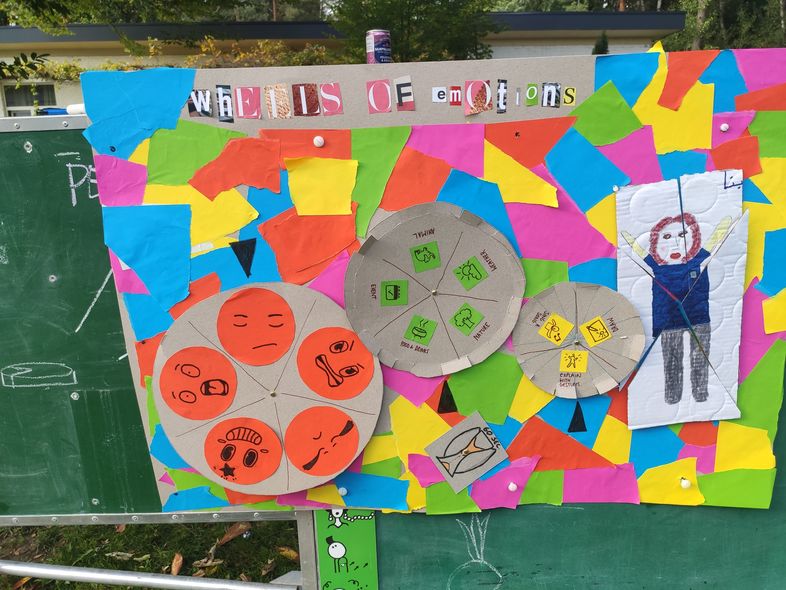
Step 1
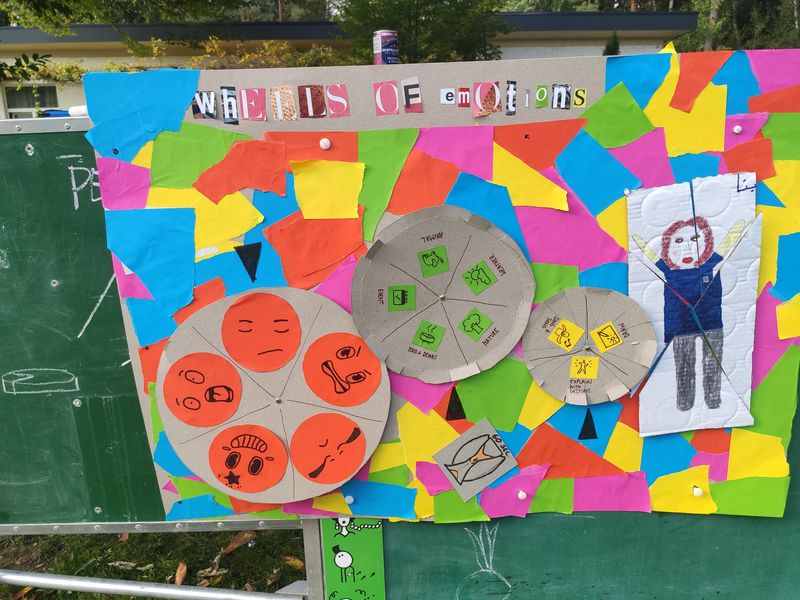
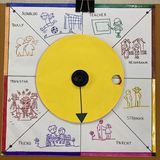
Create the three different wheels (emotion, context/theme, action) as shown in the image
Step 2
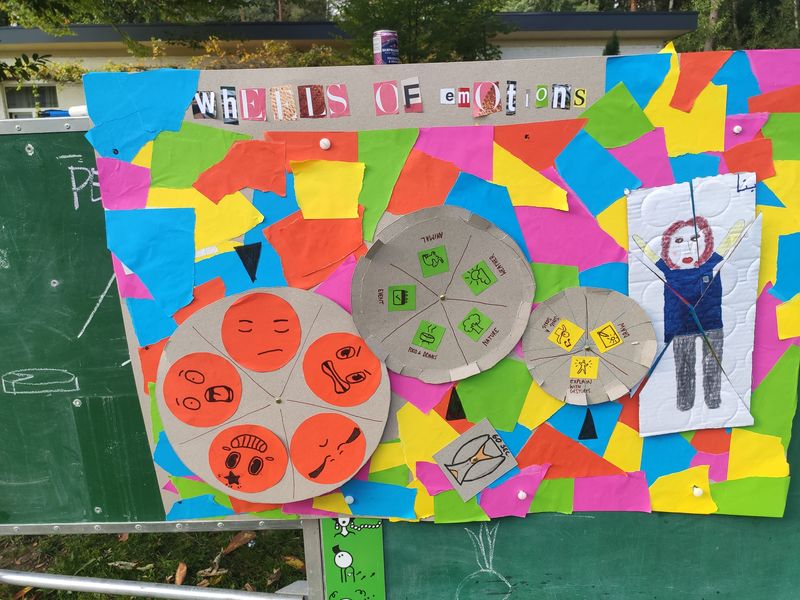
Make the human body puzzle and use the puzzle pieces as points

Prepare the game
Place the three Wheels of Emotions where all participants can reach and see them. Keep the different pieces of the human puzzle nearby.
Turn the wheels
A player spins or turns the three wheels. Each wheel determines one part of the challenge:
Together, these three elements create a new challenge for the player.
Complete the challenge
The player carries out the combination indicated by the wheels. The different contexts allow participants to practise expressing emotions in many different situations. The central idea is that emotions can be expressed anywhere and in many different contexts.
Let the others guess
Depending on the challenge, the other participants try to guess what the player is expressing, such as the emotion or context.
Earn a point
When the challenge is successfully completed or correctly guessed, the player or team earns one point.
Collect a puzzle piece
Every point corresponds to a piece of a puzzle in the shape of a human body. Add the earned piece to the puzzle
Continue playing
The next player turns the wheels and receives a new combination of emotion, context and action.
Continue until all the puzzle pieces have been collected and the human figure is complete.
Wheels of Emotions was developed by the Telenet team during a StreetwiZe Leadership Expedition.
Wheels of Emotions helps participants practise expressing emotions in different situations and contexts. The aim is not only to talk about emotions occasionally, but to become more comfortable expressing them in everyday situations.
The game can also be expanded beyond expressing emotions. Facilitators can use the activity to help participants understand and recognise emotions and explore ways of responding to or regulating them.
Instead of only expressing an emotion, ask the other participants to identify which emotion is being represented. Discuss which clues helped them recognise it. This extension is explicitly suggested in the prototype.
After an emotion has been identified, ask questions such as:
Explanatory language or text can also be added to the wheel to help children better understand and recognise emotions.
After identifying the emotion, discuss what could help someone deal with that emotion. This shifts the activity from recognising emotions towards emotional regulation and supporting others.
The three-wheel mechanism can be used for topics beyond emotions. Replace the content of the cogwheels with new themes, actions or situations while keeping the same game principle.
If you have played this game please help inform other people by giving a review.
Don’t hesitate, share your feedback and help others to pick the right games. Tell us how it was and how the children reacted? Or do you have any advice for other players, a fun variation, a possible improvement?

We very much appreciate your effort in writing the review.

Game details

Game details
Game details
Cookies saved