Journey Around the World

Travel across the globe, collect iconic places, traditions, and animals, and become the ultimate world explorer!

0 ratings & comments

Report this game

Everything you need to play this game

A step-by-step guide to play the game

1

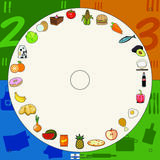
Each player chooses a token and places it on START (airport).

2

Place all markers next to the board

3

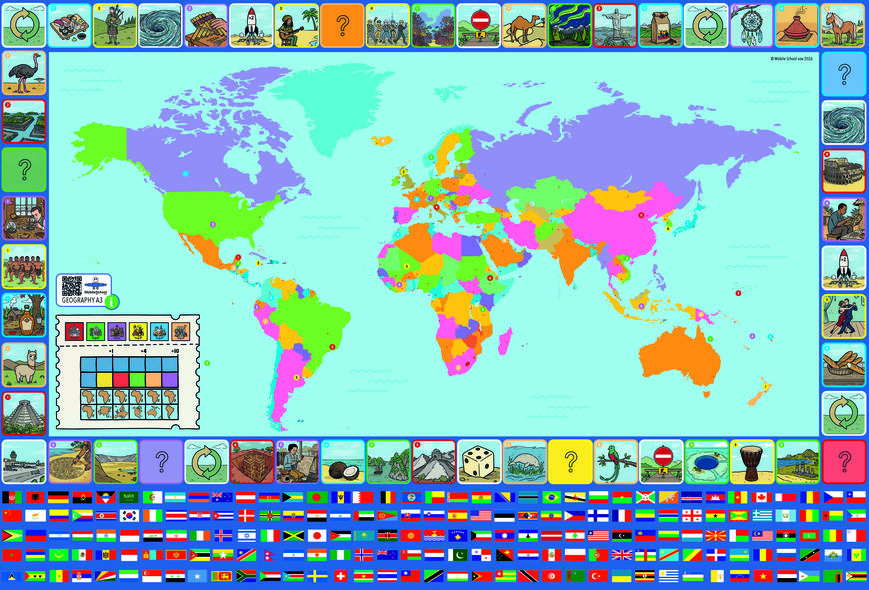
The goal is to collect 6 elements from one category (same color) OR 6 elements from one world region (Africa, Asia, Europe, North America, Oceania, South America) (see the first two rows on the boarding pass).

4

Players take turns rolling the die.

5

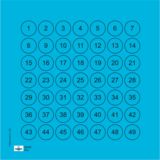
Move your token along the board

6

If you land on an element space:

  • You collect that element
  • Place a marker on the element to claim it.

That element is now yours. Other players cannot collect it anymore.

7

If you land on a special square (white border), perform the corresponding action:

  • Mandatory swap: Swap one of your collected elements with another player
  • Rocket: Move forward 2 spaces
  • Roadblock: Your journey is delayed, skip your next turn.
  • Vortex: Move to the other vortex square on the board
  • “Do you know another one?”: Name another example within the category. Correct? Choose any available element.  (The color of the border shows the category.)
8

The game ends immediately when a player collects 6 elements from one category or from one world region. That player wins the game.

Extra game information

Categories:

IMPORTANT NOTE: For the purpose of the game, each element has been linked to one specific country. Some elements may also belong to other countries or regions around the world. We mainly followed the UNESCO lists to choose the primary location, but other answers may also be correct.


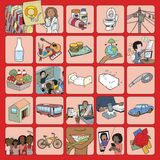
  • RED - World Heritage (cultural – buildings)
  1. Chichén Itzá (Mexico, North America)
  2. Nan Madol (Micronesia, Oceania)
  3. Christ the Redeemer (Brazil, South America)
  4. Colosseum (Italy, Europe)
  5. Great Wall of China (China, Asia)
  6. Lalibela (Ethiopia, Africa)
  • GREEN - World Heritage (natural)
  1. Great Barrier Reef (Australia, Oceania)
  2. Northern Lights (Aurora Borealis) (Norway, Europe)
  3. Easter Island (Chile, South America)
  4. Belize Great Blue Hole (Belize, North America)
  5. Ha Long Bay (Vietnam, Asia)
  6. Ngorongoro Conservation Area (Tanzania, Africa)
  • YELLOW - Intangible cultural heritage (music/dance)
  1. Haka (New Zealand, Oceania)
  2. Bagpipe (United Kingdom, Europe)
  3. Reggae (Jamaica, North America)
  4. K-pop (South Korea, Asia)
  5. Tango (Argentina, South America)
  6. Djembe (Mali, Africa)
  • BLUE - Culinary heritage
  1. Maple syrup (Canada, North America)
  2. Sushi (Japan, Asia)
  3. Coffee from Colombia (Colombia, South America)
  4. Tagine (Morocco, Africa)
  5. Baguette (France, Europe)
  6. Coconut (Fiji, Oceania)
  • ORANGE – Natural animal icons
  1. Alpaca (Peru, South America)
  2. Ostrich (South-Africa, Africa)
  3. Dromedary (Kuwait, Asia)
  4. Icelandic horse (Iceland, Europe)
  5. Quetzal (Guatemala, North America)
  6. Dugong (Papua New Guinea, Oceania)
  • PURPLE - Intangible cultural heritage (Traditional craftsmanship)
  1. Watchmaking (Switzerland, Europe)
  2. Pan flute (Ecuador, South America)
  3. Dreamcatcher (United States of America, North America)
  4. Mask carving (Ivory Coast, Africa)
  5. Batik (Indonesia, Asia)
  6. Sand drawing (Vanuatu, Oceania)


Examples for “Do you know another one?”:
  • Name another world heritage building or monument
  • Name another natural world wonder
  • Name another dance or music style specific for a country
  • Name another traditional dish from a specific country
  • Name another animal that is iconic for a specific country
  • Name another craft from a specific country


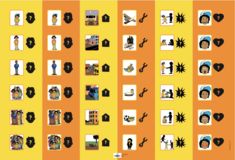
Boarding pass:

The boarding pass allows you to assign points to different combinations, for example:

  • 6 elements from 6 different colors
  • 3 sets of 2 elements from the same category
  • 1 element from each world region

You can also create your own combinations and assign points at the start of the game.

Variations

  • The game ends when a player collects 6 elements. All other players get one final turn. Then count points using the boarding pass. The player with the most points wins.
  • Limit the number of markers per player. For example, each player starts with 6 markers. You can only collect an element if you still have a marker. This makes the game more strategic.
  • Play using the point system only. Decide beforehand how many “journeys” (rounds) you will play, then count points at the end.
  • Educational version: players must share a fact about the element or country before they can collect it.
  • Team version: play in teams of 2 and collect elements together.

What people said about this game

Be the first to write a review

If you have played this game please help inform other people by giving a review.

Have you played Journey Around the World game?

Don’t hesitate, share your feedback and help others to pick the right games. Tell us how it was and how the children reacted? Or do you have any advice for other players, a fun variation, a possible improvement?

Login or signup to add your feedback

Thank you for giving us your opion on Journey Around the World!

We very much appreciate your effort in writing the review.

You might also like

Cookies saved